Paella rice, pan size and socarrat
Choose a grain and a pan that let the rice finish evenly, then learn when to stop the heat.
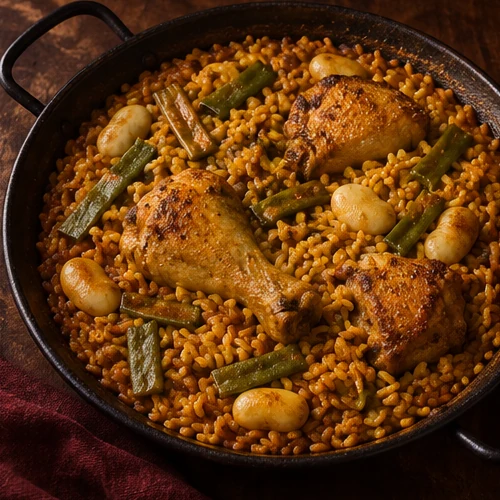
Choose a pan that fits your burner
For four servings, a paella pan about 38 cm across gives 300 g of raw rice room to spread. Measure the flat base as well as the rim. If the outside of the base sits well beyond the burner, a slightly smaller pan or a heavy wide skillet may produce more even rice on a home hob.
Before cooking, pour a little water into the cold pan. If it runs to one side, level the pan. A tilted base can leave a dry patch next to a soupy one.
Choose the grain and watch the stock
Bomba is a good starting point for a dry paella. Other Spanish round grains, such as sénia, behave differently and can soften sooner. Follow the timing for the grain you bought and keep some hot stock on hand. Gas flame, wind and pan diameter all change the rate of evaporation.
Taste the broth before adding rice. It should already have enough flavor to season the grain. Spread the rice once, then leave it alone. A gentle rotation of the pan is enough if one side bubbles much harder than the other.
Listen when the surface dries
As the grains become tender and the liquid disappears, listen for a faint crackle. That sound can signal the start of the toasted layer called socarrat. Raise the heat only briefly if needed, then stop before a sharp burnt smell appears. The bottom should smell toasted and nutty. Let the pan rest a few minutes so the surface settles before serving.